Rooming House Planning Permit Victoria.
What permits and approvals are required to build a rooming house in Victoria — planning permits, building permits, Class 1B certification and rooming-house registration, and how the council process works.
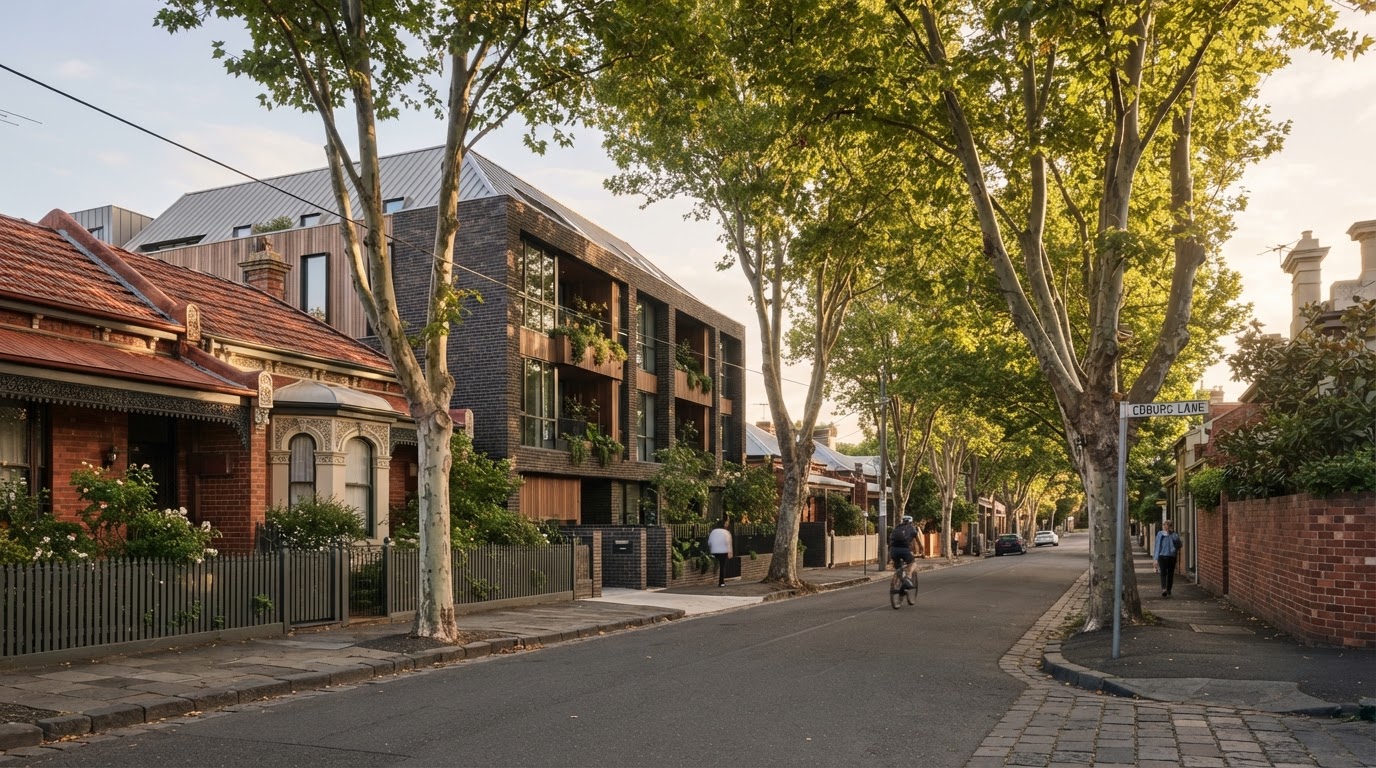
Do I need a planning permit for a rooming house in Victoria?
Usually yes. A rooming house is a defined use under Victorian planning provisions, and a planning permit is typically required — with requirements varying by zone, overlay and council. A building permit and certification to the relevant classification (most commonly Class 1B) are also required, and rooming houses must be registered and meet prescribed minimum standards. Requirements can vary depending on the site, council and proposed use, so early engagement with the relevant council is recommended.
The two permits you need
A rooming house development typically needs two separate approvals. The first is a planning permit, which authorises the rooming-house use on the site and addresses zoning, overlays, neighbourhood character and council policy. The second is a building permit, which authorises construction and certifies the building to the relevant classification — most commonly Class 1B under the National Construction Code.
Planning permit
Because a rooming house is a defined use, the planning permit tests whether the site can lawfully operate as a rooming house. The zone determines whether the use is permitted, discretionary or prohibited. Overlays — heritage, neighbourhood character, design and development, environmental — add layers of consideration. Each council applies its own policy, so the requirements differ across Melbourne and Victoria.
Building permit and Class 1B
The building permit certifies that the construction complies with the National Construction Code. Most rooming houses fall under Class 1B, which carries specific requirements for fire safety, egress, room sizes, accessibility, smoke detection and acoustic separation that differ from a standard Class 1a dwelling. A building surveyor certifies compliance.
Rooming house registration
Separate from the planning and building approvals, rooming houses in Victoria must be registered and meet prescribed minimum standards for rooms, facilities and management. Registration and operational requirements are distinct from the development approvals.
What determines whether you get approval.
Requirements can vary depending on the site, planning scheme and proposed use. Our team coordinates with the relevant consultants and authorities.
Zone provisions
Whether the zone permits a rooming-house use, and what standards apply — setbacks, height, density and site coverage.
Overlay controls
Heritage, neighbourhood character, design and development, environmental and other overlays that add layers of planning consideration.
Council policy
Each council applies its own policy on rooming houses and multi-dwelling development. Early engagement with the relevant council is recommended.
Building classification
Most rooming houses are certified to Class 1B, with fire safety, egress, room-size and accessibility provisions certified by a building surveyor.
Minimum standards
Prescribed minimum standards cover room size, ventilation, lighting, locks, heating and shared facilities — separate from the building classification.
Rooming house registration
Rooming houses must be registered and meet operational requirements under Victorian law — separate from the planning and building permit process.
Each council applies its own policy.
We work across the Melbourne metropolitan councils, engaging early on the requirements that apply to each site.
Rooming house planning permit FAQs.
Do I need a planning permit for a rooming house in Victoria?
Usually yes. A rooming house is a defined use under Victorian planning provisions and a planning permit is typically required, with requirements varying by zone, overlay and council. Early engagement with the relevant council is recommended to understand what applies to your site.
Do I need a building permit for a rooming house?
Yes. A building permit is required to authorise construction and certify the building to the relevant classification — most commonly Class 1B under the National Construction Code, which carries specific fire-safety, egress, room-size and accessibility provisions.
Does a rooming house need to be registered in Victoria?
Yes. Rooming houses in Victoria must be registered and meet prescribed minimum standards covering room size, ventilation, lighting, locks, heating and shared facilities. Registration is separate from the planning and building permit process.
Can I convert an existing house into a rooming house?
Sometimes. Conversion depends on the existing layout, room sizes, bathroom provision, fire safety, egress, parking and whether the planning controls permit a rooming-house use on the site. A feasibility assessment of the existing dwelling is the first step.
How long does planning approval take?
Planning permit timelines vary by council, the complexity of the application, whether objections are received and whether the matter goes to review. Indicatively, allow several months for a straightforward application and longer for complex sites. These are indicative ranges only.
Not sure if your site can be approved?
Start with a preliminary feasibility assessment — zoning, overlays, council and what your block could support as a rooming house.
Assess Your Site →