Class 1B Co-Living Melbourne.
What Class 1B is, what it requires, and how the building classification governs the design and construction of co-living developments in Melbourne.
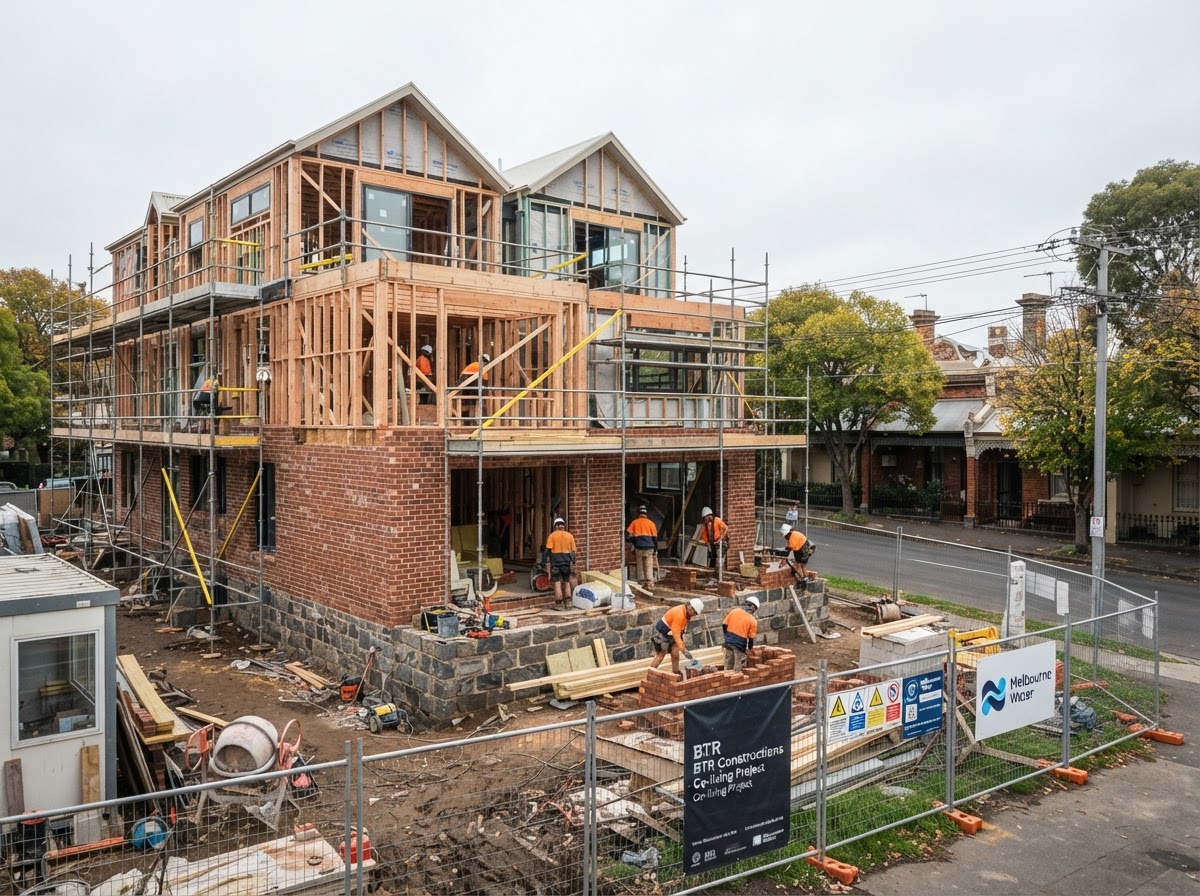
What is Class 1B?
Class 1B is a building classification under the National Construction Code. It covers boarding houses, guest houses and hostels of a limited scale — and it is the classification most commonly applied to rooming houses and small co-living developments. It carries specific requirements for fire safety, egress, room sizes, sanitary facilities and accessibility that differ from a standard Class 1a dwelling.
Because most purpose-built co-living and rooming house developments fall under Class 1B, the classification shapes the design from the earliest stage — not as an afterthought. Getting the classification right early prevents costly rework during approvals and construction.
What Class 1B requires.
Fire safety
Smoke alarms, separation and egress provisions to suit the classification and the number of occupants.
Egress
Safe evacuation paths from every suite and shared area, sized for the occupant count.
Room sizes
Minimum floor areas for bedrooms, with ceiling height and ventilation requirements.
Bathrooms
Sanitary facility ratios and accessibility provisions for shared and ensuite bathrooms.
Kitchens
Kitchen and food preparation facilities, sized for the number of occupants.
Accessibility
Accessible entries, circulation and facilities to the applicable standard.
Class 1B vs Class 1a.
The classification changes more than people expect.
| Aspect | Class 1a (standard house) | Class 1b (rooming/co-living) |
|---|---|---|
| Use | Single dwelling | Boarding/guest house or hostel (limited scale) |
| Occupants | A single household | Multiple unrelated people |
| Fire safety | Residential provisions | Enhanced provisions for scale |
| Egress | Standard | Sized for occupant count |
| Sanitary facilities | To suit one household | Ratio for occupants |
| Accessibility | Limited | Accessible provisions required |
Class 1B FAQs.
What is Class 1B?
Class 1B is a building classification under the National Construction Code covering boarding houses, guest houses and hostels of a limited scale. It is the classification most commonly applied to rooming houses and small co-living developments, with specific requirements for fire safety, egress, room sizes, sanitary facilities and accessibility.
Does my co-living development need to be Class 1B?
Most rooming houses and small co-living developments in Victoria fall under Class 1B. The correct classification depends on the use, scale and configuration, and should be confirmed with a building surveyor early in the design process.
What is the difference between Class 1a and Class 1b?
Class 1a covers a single dwelling for one household. Class 1b covers boarding houses, guest houses and hostels of a limited scale where multiple unrelated people occupy the building. Class 1b carries enhanced fire safety, egress, sanitary facility and accessibility provisions.
Build to the right classification.
Class 1B shapes the design from the start. Assess your site and the classification that applies before you commit.
Assess Your Site →