Co-Living vs Traditional Investment Property.
Should you build a co-living rooming house or a standard investment property? A direct comparison of income, yield, vacancy risk, build cost and management for Melbourne investors.
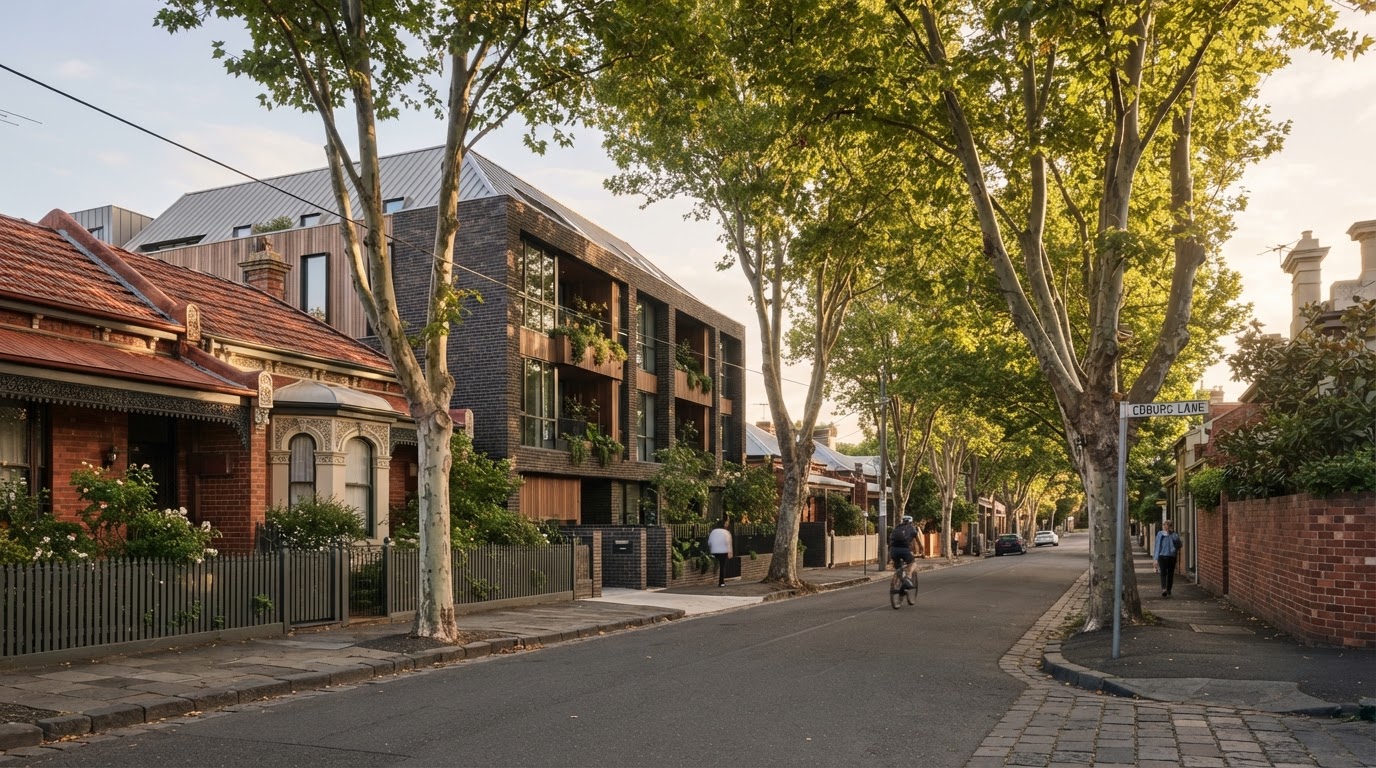
Is it better to build a co-living rooming house or a standard investment property?
Neither is universally better. A co-living rooming house produces materially higher gross yield — commonly 11–13% for a 9-room development versus 3–5% for a standard rental — because one site generates multiple rental incomes. The trade-off is higher build cost per square metre, active multi-tenant management and Class 1B compliance. A standard investment property is simpler, cheaper to build and less management-heavy but produces a single income. The right choice depends on your site, budget, risk appetite and how hands-on you want to be.
The two investment models
A traditional investment property is a single dwelling leased to a single household — one tenancy, one income, one set of risks. A co-living rooming house is a single site developed into multiple private suites, each leased separately — many tenancies, many incomes, with vacancy risk spread across them.
The core trade-off is straightforward: co-living costs more to build and requires active management, but it produces materially higher gross yield and diversifies vacancy risk across many tenants rather than concentrating it on one. A traditional rental is simpler and cheaper but produces a single income and concentrates all vacancy risk on a single tenancy.
Co-living vs traditional investment property.
| Metric | Traditional property | 9-room co-living |
|---|---|---|
| Income sources | 1 tenancy | 9 separate leases |
| Indicative gross rent | $30k–$45k / yr | ~$210k / yr |
| Indicative gross yield | 3–5% | 11–13% |
| Vacancy risk | 100% of income at risk | ~11% per vacant suite |
| Build cost | Standard residential | Higher (multi-suite, Class 1B) |
| Management | Single tenancy | Active multi-tenant |
| Compliance | Standard dwelling | Class 1B + rooming-house use |
| Capital growth focus | Often the primary driver | Income + growth combined |
Illustrative only. Actual results vary by site, suburb, costs and market. Not financial advice.
When co-living makes sense for an investor
Co-living tends to suit investors who want higher yield from a single site, are comfortable with active management, and have a site that can support a multi-room configuration under the local planning controls. It rewards those who understand the numbers before they build — and who choose a builder who understands the full development process, not just construction.
When a traditional investment property makes sense
A traditional rental suits investors who want simplicity — one tenancy, lower build cost, lower management intensity — and who prioritise capital growth or a hands-off holding over maximum gross yield. It is the lower-complexity path, and for many investors that is the right call.
The decision framework
The choice comes down to four questions: does your site support a multi-room configuration? Do you want maximum gross yield or simplicity? Are you comfortable with active management? And can your budget absorb the higher build cost? If the answer to all four is yes, co-living is the stronger investment. If not, a traditional rental may be the better fit.
Co-living vs traditional investment FAQs.
Is co-living a better investment than a traditional rental?
Co-living offers materially higher gross yield — commonly 11–13% for a 9-room development versus 3–5% for a standard rental — but at higher build cost and with active management. A traditional rental is simpler and cheaper but produces a single income. The right choice depends on your site, budget, risk appetite and management preference.
Why does co-living have a higher yield?
Because a single site produces multiple rental incomes. Where a traditional rental generates one tenancy income, a 9-room co-living property generates nine. The higher build cost is spread across more income, lifting the gross yield.
What are the downsides of co-living as an investment?
Higher build cost per square metre, active multi-tenant management, Class 1B and rooming-house compliance, registration requirements, and greater sensitivity to room rents and occupancy. These are manageable but real costs to factor into the investment decision.
Can I build co-living on the same block as a traditional house?
It depends on zoning, overlays, council policy, frontage and site access. A site that supports a standard dwelling may or may not support a multi-room rooming-house configuration. A feasibility assessment is the way to find out before you commit.
Compare them with your numbers.
Use the calculator to model co-living against a traditional investment property for your scenario and site.
Open the calculator →