Rooming House Builders Victoria.
Design, planning and construction of rooming houses across Melbourne and regional Victoria — purpose-built shared accommodation built to perform and to comply with Victorian requirements.
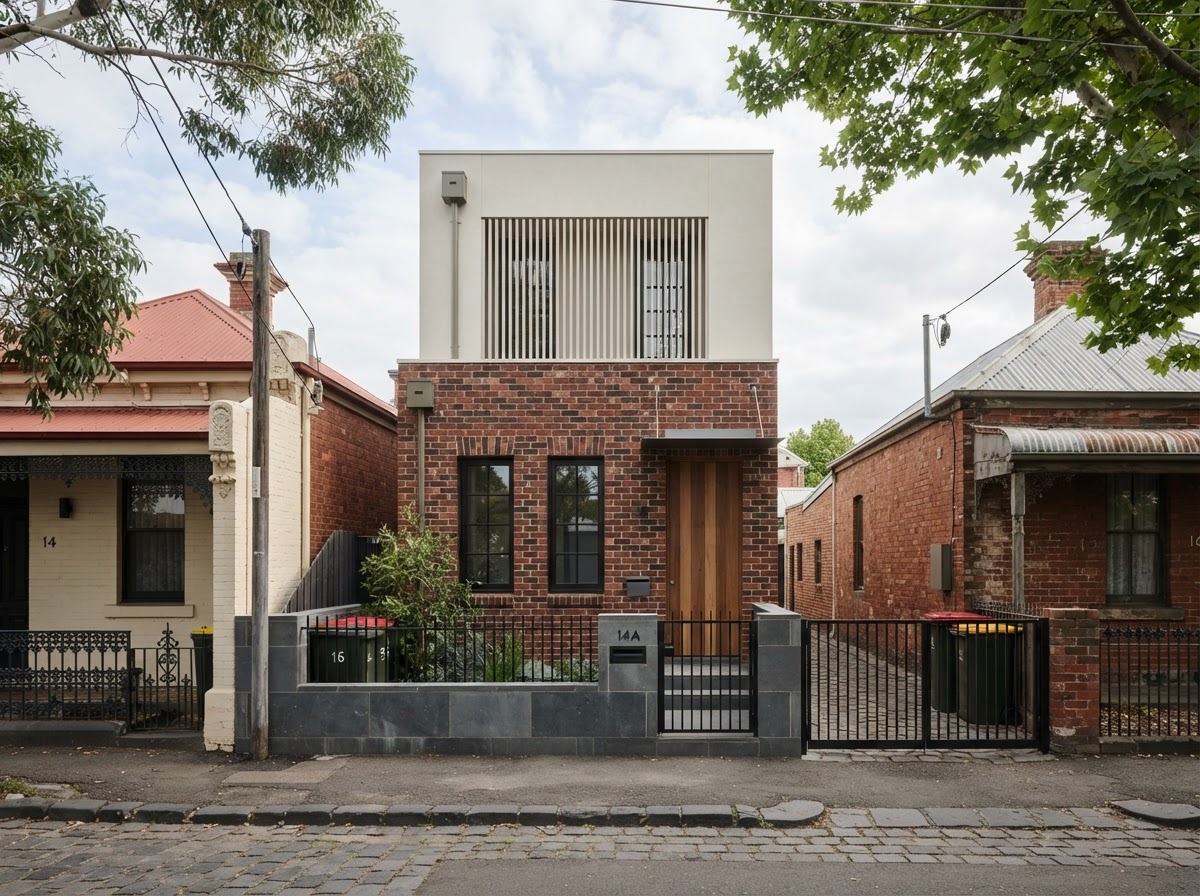
What is a rooming house in Victoria?
In Victoria, a rooming house is a building where one or more rooms are available to rent to four or more unrelated people, who typically share facilities. It is a defined use with its own planning, building and registration requirements under Victorian law. Most purpose-built rooming houses fall under Class 1B of the National Construction Code.
Why build a rooming house in Victoria?
A rooming house turns a single residential site into multiple rental incomes. Across Victoria — and especially in regional centres where land is more affordable — lower land cost can lift yield potential, while hospital, university and logistics employment anchors sustain tenant demand. Done well, it meets a genuine need for affordable, well-managed shared housing.
How many rooms can a rooming house have?
Victorian planning provisions set out circumstances — commonly involving up to 9 bedrooms and 12 occupants — that affect whether a rooming house requires a planning permit and how it is assessed. We design across 4–9 room configurations, with the 9-room development the high-yield benchmark where the site supports it.
Rooming house configurations, statewide.
From a lower-risk 4-room entry to the high-yield 9-room benchmark.
Smaller-scale rooming house suited to narrow suburban blocks and lower-risk entry points.
A balanced configuration for standard residential lots with moderate frontage.
Strong per-site returns on typical Melbourne suburban blocks.
Efficient use of mid-sized lots; suits double-storey designs.
Premium configuration approaching maximum density for many zones.
Nine self-contained suites — the high-yield benchmark for purpose-built co-living.
What a Victorian rooming house has to satisfy.
Rooming houses carry specific requirements beyond a standard dwelling — statewide.
Planning permit
A rooming house is a defined use. A planning permit is typically required, with requirements varying by zone, overlay and council across Victoria.
Rooming house registration
Rooming houses in Victoria must be registered and meet prescribed minimum standards for rooms, facilities and management.
Class 1B construction
Most rooming houses fall under Class 1B of the NCC, with fire safety, egress, room-size and accessibility provisions.
Minimum standards
Prescribed minimum standards cover room size, ventilation, lighting, locks, heating and shared facilities.
Rooming houses beyond Melbourne.
Geelong, Ballarat and Bendigo — where affordable land and employment anchors create regional rooming-house opportunity.
Geelong
Deakin University, University Hospital and port logistics. Established lots and growth corridors.
Learn more →Ballarat
Ballarat Base Hospital, Federation University and V/Line to Melbourne. Affordable, generous lots.
Learn more →Bendigo
Bendigo Health, La Trobe University and a strong regional economy. Deep, affordable blocks.
Learn more →Rooming house Victoria FAQs.
Do I need a planning permit for a rooming house in Victoria?
Usually yes. A rooming house is a defined use under Victorian planning provisions and a planning permit is typically required, with requirements varying by zone, overlay and council. The provisions set out circumstances — commonly involving up to 9 bedrooms and 12 occupants — that affect assessment. Early engagement with the relevant council is recommended.
Does a rooming house need to be registered in Victoria?
Yes. Rooming houses in Victoria must be registered and meet prescribed minimum standards covering room size, ventilation, lighting, locks, heating and shared facilities. Registration and operational requirements are separate from the planning and building approval process.
What is the difference between a rooming house and co-living?
In practice they overlap heavily. A rooming house is a defined use under Victorian law. Co-living describes a similar, often purpose-built model. Many purpose-built co-living developments are also rooming houses and fall under Class 1B.
Can I build a rooming house in regional Victoria?
Yes — Geelong, Ballarat and Bendigo are the strongest regional opportunities. Lower land costs can lift yields, though room rents are typically below Melbourne. A site-specific feasibility assessment confirms whether a regional site stacks up.
Considering a rooming house in Victoria?
Start with a preliminary feasibility assessment to understand what your Victorian site can support — zoning, overlays, council and site access.
Assess Your Site →